|
||||||
|
Welcome to the TBCS Community Forums forums. You are currently viewing our boards as a guest which gives you limited access to view most discussions and access our other features. By joining our free community you will have access to post topics, communicate privately with other members (PM), respond to polls, upload content and access many other special features. Registration is fast, simple and absolutely free so please, join our community today! If you have any problems with the registration process or your account login, please contact contact us. |
![]() |
|
|
Thread Tools |
|
#1
|
|||
|
|||
|
Hey this is my first post but have been reading for a while. So my question is what would I cut acrylic to get these curves.
![]() Also second how would I fit it into the side panel. I saw on one featured work log here that they cut all the parts individually then glue them to a clear sheet and glue that to the panel. Is there any other to do this without a second sheet. Thanks everyone. |

|
#2
|
||||
|
||||
|
If the acrylic isn't too thick then I would just blast through it with a rotary tool cutting disk and file it smooth with a hand file. You can still do this with thick acrylic, you just have to be careful that the melted acrylic doesn't form around the disk and cool back down, otherwise you risk cracking the acrylic if it happens at a narrow spot.
I'm not sure I fully understand the second question. If you have a square hole in the side panel, if you put that up there, then you would have holes in the window where the negative space is. If you just want a window to show through with the shape you are showing, then you would just use a square piece of acrylic behind the door panel and cut the shape into the door panel instead. Welcome! If you give some more information about what you are trying to do, we can give a bit more help. =) |
|
#3
|
||||
|
||||
|
There are several good tutorials regarding plexi in our tutorials section: tutorials
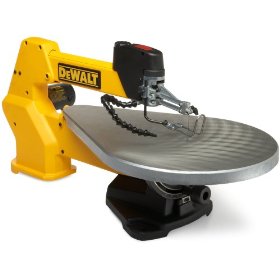
and a nice demo of flame-polishing plexi on the Modwiki here: flame polish plexi What I tend to do is use a table jig-saw like this if you have one: ![]() If not, you can make wide rough cuts with a coping saw: ![]() Follow up with small metal files and sand paper, then flame polish. As for mounting them on another sheet, you might consider mounting them on a sheet of mesh for a more clever look: ![]() |
|
#4
|
||||
|
||||
|
The best thing I've found for cutting curves freehand (or straight cuts if you have a good fence) in acrylic is a table-mounted router with a spiral carbide cutter. You can also use a standard carbide-tipped router bit but the cut is a little more rough. You can use that to cut out the large areas then put a small-diameter cutter in place (like a Rotozip spiral bit) to do the finish cuts.
Also remember that cast acrylic is a lot easier to machine than extruded acrylic. It's denser and has a higher melting point, alleviating the build-up around the cutter mentioned previously.
__________________
When you're lying on your deathbed looking back at your life, which will you regret most? The things that you did? Or the things that you didn't do? |
|
#5
|
|||
|
|||
|
Quote:
|
|
#6
|
|||
|
|||
|
I would recommend trying to find someone to laser cut it for the best results, you could try to do it by hand but it may or may not turn out as perfect as you might want it.
__________________
Quote:
Myrmidon |
|
#7
|
|||
|
|||
|
Do you mean the acrylic? Because I never saw laser cut steel. Im still in high school so of course there is a budget. How much do you think it would cost for someone with a laser cutter to cut the side and the acrylic to fit. Im also planing a electronic project like the one in SXRguyinMA's Tempest SXR. So if it is cheaper than a rotary blade and files and all that then I will go that route with the laser. Even if it is like $30 more expensive because I will need precise cuts and also very good filing. And if I mess up I need a new sheet of acrylic.
|
|
#8
|
||||
|
||||
|
I can cut acrylic up to 8.5"x13.5". I can also supply very precise CAD drawn templates for cutting the metal. It'd still be a lot of hand fitting though if you want the acrylic to inset into the cutout with no slop. I'd really recommend doing a couple layers of acrylic, one 1/16" thick that will match your hole, and another clear piece inside just a little larger to mount it to the inside of the panel.
__________________
I have a hammer! I can put things together! I can knock things apart! I can alter my environment at will and make an incredible din all the while! -Calvin |
|
#9
|
|||
|
|||
|
Quote:
|
![]() |
«
Previous Thread
|
Next Thread
»
| Thread Tools | |
|
|
Powered by vBulletin® Version 3.6.8
Copyright ©2000 - 2013, Jelsoft Enterprises Ltd.
thebestcasescenario.com


.jpg)